
Sustainable Gold Mining in South Africa: Harnessing Solar Energy for Innovation and Growth

Sustainable Gold Mining in South Africa: Harnessing Solar Energy for Innovation and Growth

The gold mining industry in South Africa has faced numerous obstacles, but it remains prosperous, gaining from one of the world’s most significant reserves of precious metals and companies skilled in managing the complexities of operating in Africa’s ninth-largest country.

South Africa is renowned for having some of the most extensive gold reserves worldwide, with an estimated 5,000 tonnes of proven gold reserves. This represents the majority of Africa’s total known reserves of 6,800 tonnes, significantly exceeding the 3,000 tonnes held by the United States.

Since the Witwatersrand gold reef was uncovered near Johannesburg in 1886, South African miners have demonstrated exceptional resilience and resolve. They have adeptly handled a variety of challenges, such as conflicts, the difficulties associated with older and deeper mines, labour disputes, and uncertain regulatory environments, through innovation and a relentless commitment to mining this precious mineral resource.

While these challenges are familiar to mining companies globally, those in South Africa must deal with the added difficulty of operating in an environment where Eskom, the national electricity provider, is unable to meet the country’s power needs due to outdated and defective energy infrastructure.

This situation has made investment in alternative energy sources a pressing necessity in South Africa. In response, gold mining firms in the area have risen to the occasion by funding renewable energy projects to keep their operations running and safeguard their miners underground.

Pan African Resources leads the way as one of the initial mining companies to develop and commission a grid-tied, utility-scale solar facility with a 10MW capacity at its Evander mining sites. The firm is also investigating further solar power projects at its other sites and is constantly revising its renewable energy strategy to include wind power, hydroelectricity, battery storage, and electricity distribution over the national grid.

The risk of electricity supply disruptions and the effects of climate change introduce a range of risks and potential costs to gold mining activities. Bearing this in mind, Pan African Resources is dedicated to achieving energy autonomy and reducing operational costs through its sustainability efforts, which involve improving energy efficiency and expanding its renewable energy portfolio.

The Shift to Solar: A Sustainable Choice

The worldwide movement towards renewable energy and away from fossil fuels is a key agenda, highlighted by the agreement of 196 countries to the Paris Agreement. This agreement aims to cap the global temperature increase well below 2°C above pre-industrial levels, aspiring to limit the rise to 1.5°C. Achieving these goals requires greenhouse gas emissions to peak by 2025 and decrease by 43% by 2030. The record number of climate-related disasters and unprecedented high temperatures in 2023 emphasise the critical need to combat the escalating impacts of climate change.

The mining sector, traditionally reliant on fossil fuels for extraction, processing, and operation, is among the most energy-demanding industries, accounting for 10% of global emissions. Specifically, the gold mining industry emitted 126 Mt CO2 in 2019, equivalent to burning 300 million barrels of oil, according to Nature Vault. This is in stark contrast to the approximately 70 Mt CO2 emissions from the iron ore sector, as reported by SP Global, and steel production’s role as the primary contributor to emissions within the mining and metals sector, constituting 7% of its total emissions, based on findings from KU Leuven.

Conscious of its environmental impact, the gold mining sector recognises the importance of reducing its contribution to climate change. To sustain their operations, numerous mining companies are adopting sustainability paths, including utilising renewable energy sources to power their operations, thus decreasing their dependency on fossil fuels and reducing carbon emissions.

Leading this shift, Pan African Resources is actively diversifying its energy sources by incorporating a greater share of solar energy into its operations. The abundant, cost-effective, and sustainable nature of solar power makes it an ideal choice in Africa, significantly reducing the mining operations’ environmental footprint.

The shift towards solar energy in gold mining offers several environmental advantages beyond lowering greenhouse gas emissions, such as conserving water and rehabilitating land affected by mining. Often, gold mining sites have extensive unused land suitable for recovery, such as the location of Pan African Resources’ Evander solar plant, built on previously utilised land for worker accommodation. Moving employees to communities nearby has also improved their quality of life.

Moreover, Pan African Resources addresses the mining industry’s significant water consumption by introducing a water recycling facility, allowing the reuse of substantial amounts of underground water for mining processes. This not only saves costs by reducing municipal water purchases but also provides more potable water to local communities. Additionally, solar energy projects present opportunities for agro-voltaic initiatives, utilising the space beneath solar panels for agriculture, thereby optimising land use, providing necessary shade for crops, and reducing water evaporation by 20% to 30%.

Renewable energy is undoubtedly shaping the future of gold mining, with the International Renewable Energy Agency forecasting a 16% reduction in the mining sector’s energy-related emissions by 2030 through the adoption of renewable energy sources.

The Economic Benefits of Solar in Mining

Growth Potential

The Boston Consulting Group (BCG) highlights three key areas for mining companies to take immediate action to tap into the potential offered by gold mining in South Africa: enhancing exploration efforts to discover new resources, tackling the current unreliable and costly energy supply, and improving the cost efficiency of everyday mining operations. These challenges can be met by focusing on innovative and sustainable growth strategies that include a larger share of renewable energy sources within the gold mining industry’s energy portfolio.

Companies in the gold mining sector making the switch to renewable energy sources can also reap significant long-term financial benefits from solar power. Solar energy installations, with their lifespan of 25 to 30 years, offer a reliable and sustainable alternative to traditional energy supplies, allowing mining companies to capitalise on growth opportunities and cost savings for many years.

Renewable energy enables mining operations to achieve energy self-sufficiency, producing the required energy on-site rather than depending on grid-supplied electricity. This reduces the risk of power outages, a particularly acute risk in South Africa, and eliminates exposure to the fluctuations in fossil fuel prices driven by global economic and geopolitical developments.

Innovative exploration, utilising modern software and modelling techniques, is a fundamental aspect of Pan African Resources’ strategy for growth. The company has strengthened its technical capabilities and enhanced its mining and underground planning by adding more in-house ore resource geostatisticians and mine planners.

Cost-Effectiveness

BCG also points out the issue of costly, unreliable, and unsustainable electricity as a major barrier to the success of the gold mining industry in South Africa. It notes that South Africa’s electricity costs are among the highest compared to a selection of other countries and are particularly high within the mining sector. The recent approval of a tariff increase of approximately 19% by the National Electricity Regulator of South Africa (NERSA), along with the financial and debt challenges facing the utility, means that these costs are likely to continue to escalate. BCG’s analysis indicates a growing gap between electricity supply and demand up to 2030.

https://media-publications.bcg.com/south-africa-untapped-goldmine-opportunities-for-mining.pdf

Without intervention, the burden of high energy costs and continued reliance on coal-fired power generation could undermine the competitiveness of South African gold mines. Fortunately, the industry has anticipated this challenge and has begun to invest in alternative energy solutions.

BCG also emphasises the importance of improving the cost efficiency of daily operations in the South African gold mining sector. Renewable energy is seen as the most viable means to achieve this, offering substantial long-term cost savings that can enhance the financial performance of mines by reducing dependency on increasingly expensive grid electricity, boosting productivity, minimising downtime, and lowering operational costs.

Moreover, by generating their own energy, companies not only insulate themselves from the volatility of energy prices but may also create additional revenue streams by selling surplus energy back to the grid.

Pan African Resources is already witnessing the financial benefits of its investment in solar energy. The company’s Elikhulu solar PV plant is saving approximately R3 million per month, or R36 million annually, on electricity costs. With a goal to achieve 30 MW of solar capacity by 2024, the company could save around R100 million annually by producing 75,000 MWh of energy each year.

Atlas Renewable Energy summarises the financial rationale for mining companies’ adoption of solar power, stating: “Solar power is not merely about sustainability; it’s a strategy for mining companies to remain competitive in an industry where cost efficiency is paramount.”

Diversification and Risk Mitigation

The South African Power Crisis

The ongoing energy crisis in South Africa poses a significant challenge for gold mining companies operating in the region. To mitigate this challenge, it’s essential for these companies to diversify their energy portfolios, reducing their reliance on fossil fuels by incorporating a variety of renewable energy sources.

At Pan African Resources’ Evander gold mining operation, the impact of load shedding — deliberate power cuts to prevent grid overload — has been starkly evident, with interruptions in the electricity supply from the grid resulting in a 5% decline in production within just a six-month timeframe. By enhancing the solar power capacity at this location, the company is determined to markedly diminish the threat of power shortages, thereby safeguarding future production levels.

The decision to invest in solar energy is further justified by the diminishing payback periods, driven by the escalating electricity prices charged by Eskom, the primary energy supplier in South Africa. For instance, the solar power setup at the Evander mine, which cost approximately R150 million to establish, was anticipated to pay for itself within five years as of 2022. This period is expected to shorten further with the predicted increases in Eskom’s tariffs, boosting the return on investment and fortifying the financial health of the entire organisation.

A Resilient Investment

Gold mining companies in South Africa, Pan African Resources included, are progressing with their renewable energy projects, demonstrating a commitment to durable and sustainable investments. Ensuring a reliable energy supply protects these businesses from the negative impacts of international geopolitical tensions and the potential economic recessions triggered by spikes in worldwide energy costs.

With nations like the United States facing the possibility of a recession due to sustained high-interest rates, diversifying investments across various regions, sectors, and asset types becomes increasingly prudent. In these volatile times, gold mining companies that have secured their energy requirements are poised to benefit from the perceived stability of gold as an investment. As the value of gold increases, so does the profitability of mines that have proactively managed their energy expenditures, thereby enhancing their financial prospects amidst global economic uncertainties.

Addressing Environmental Concerns in Mining

The mining sector has traditionally been linked with significant environmental impacts, including the destruction of ecosystems, alteration of landscapes, and adverse effects on the quality of soil, water, and air. Furthermore, mining operations are notably high consumers of energy, contributing substantially to global greenhouse gas emissions.

To address these environmental issues, the industry has implemented a range of measures aimed at reducing the ecological damage caused by mining activities. These include restoring landscapes to prevent erosion, cleaning up soils contaminated with metals or chemicals from the mining process, and controlling emissions into the air.

In recent years, the focus has expanded to include the industry’s carbon footprint, particularly the high levels of greenhouse gas emissions associated with the use of electricity and a historical dependence on fossil fuels.

Efforts to mitigate these impacts include enhancing energy efficiency through various means such as adopting modern, low-emission machinery, and utilising electric vehicles and equipment for underground operations. Additionally, the deployment of renewable energy projects aims to lessen the reliance on non-renewable energy sources. According to the World Gold Council, shifting to renewable energy and improving energy efficiency by 2% to 8% could lead to a 4% reduction in gold mining emissions by 2030, helping the sector align with international climate goals.
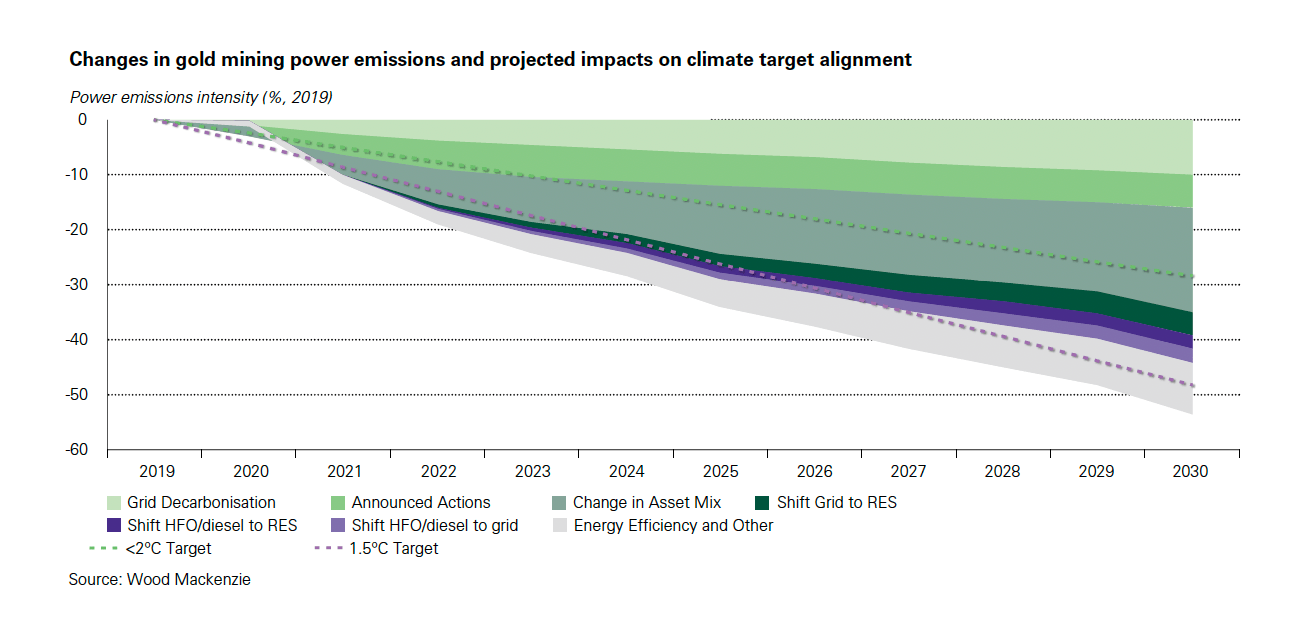
Pan African Resources is dedicated to producing gold in a manner that prioritises safety, efficiency, and environmental sustainability, minimising its ecological footprint. The company has outlined a detailed decarbonisation and energy management plan for the next decade.

Ambitious targets have been set by the company to escalate its renewable energy usage to 15% by 2027, 30% by 2030, and 50% by 2035. Considerable investments in solar energy have been made at the Evander Mines, which is currently operational and poised for capacity expansion, and at the Barberton Mines, slated to commence operations in June 2024.

Additionally, Pan African Resources has secured a Power Purchase Agreement (PPA) with Sturdee Energy for the distribution of 40 MW across the grid and is contemplating a 10MW solar initiative at its MTR project. The company is vigorously pursuing renewable energy PPAs for wind, hydro, and battery storage solutions.

In its pursuit of energy independence and a smaller carbon footprint, Pan African Resources has achieved notable progress in energy efficiency, reducing its electricity consumption from 1.40 million GJ in 2021 to 1.38 million GJ in 2022, despite an uptick in mining volumes. Initiatives such as the introduction of high-efficiency motors and compressors, along with the exploration of battery-operated vehicles for underground use, have been implemented.
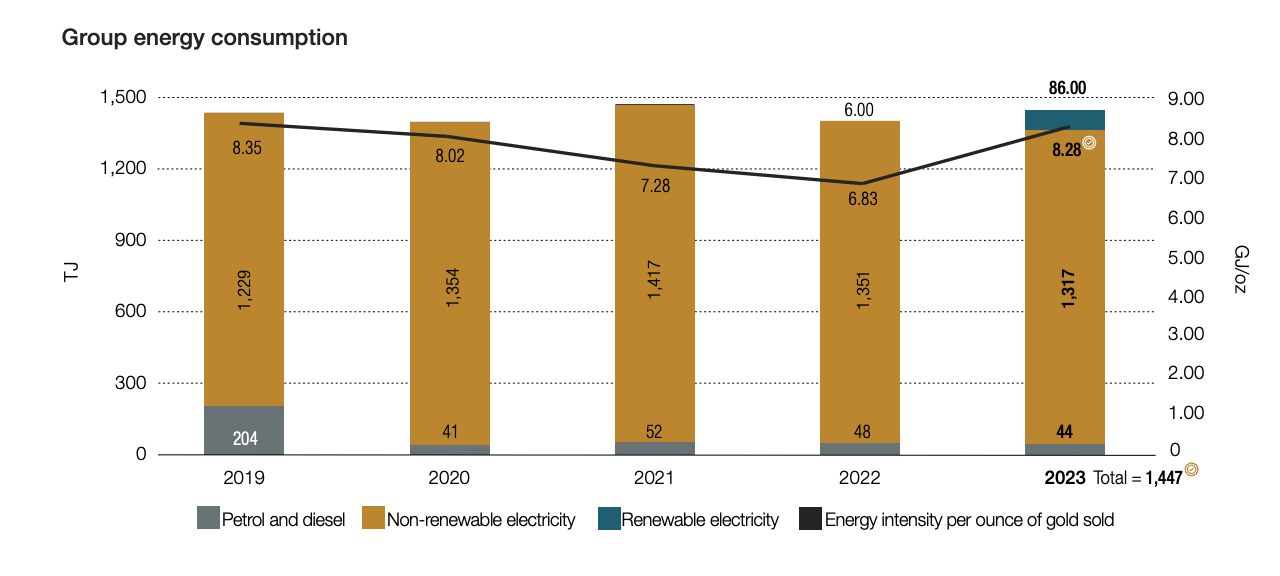
Through these comprehensive measures, Pan African Resources is steadfast in its commitment to uphold the highest standards of sustainable development, aiming to ensure that its future operations have a minimal environmental impact. This commitment is rooted not just in ecological responsibility but also in the understanding that sustainable practices are essential for the long-term success of the business.

Demonstrating Adaptability in a Fast-Changing Market

The gold mining industry in South Africa boasts a storied history that spans over a century, yet its sustained success and growth are contingent upon its agility in adapting to the ever-changing market landscapes and increasingly complex mining conditions. Miners in South Africa are tasked with the dual challenge of navigating a more expensive cost structure while also striving to boost productivity to maintain a competitive edge on the international stage.

Pan African Resources has managed to stay at the forefront of this competitive field by adopting a forward-thinking approach and embracing cutting-edge technologies and practices. The company places significant emphasis on the strategic use of technology to not only enhance safety standards and the quality of output but also to maximise overall efficiency and capitalise on growth opportunities. The role of digital innovation is pivotal in the company’s risk management strategy, particularly in protecting against data breaches and bolstering cybersecurity protocols.

Faced with the growing complexities of underground mining, Pan African Resources has pivoted towards more sustainable and economically viable methods, such as the reprocessing of gold from mine tailings, which presents lower risks and demands lesser capital outlay.

A key innovation embraced by the company is the BIOX® processing method, which leverages bacterial action to liberate gold from sulphide ores, providing an eco-friendlier alternative to conventional techniques.

This method not only curtails the need for hefty capital investments but also proves advantageous for remote operations and ongoing process enhancements. To further refine this process, the company employs Gas Chromatography-Mass Spectrometry (GCMS) technology for precise monitoring of the bacterial cultures in the BIOX® facility.

Our Long-Term Vision: Partnerships and Growth

For Pan African Resources, the concept of sustainability transcends operational efficiencies and environmental conservation, extending into the realm of cultivating enduring partnerships with all stakeholders, notably with investors who value long-term sustainability and recognise the intrinsic value of gold as an investment class. Historically, gold has delivered exceptional returns, positioning it as a dependable asset, particularly in periods marred by macroeconomic and geopolitical volatilities.

Pan African Resources has proven its growth potential as a mid-tier gold mining company, seizing opportunities presented by the consolidation within the industry, such as through the acquisition of Mintails Mining SA, which notably augmented the company’s output capacity by 25%. The company’s dedication to innovation has facilitated the profitable extraction of gold from surface tailings, while its strategic investments in renewable energy sources, encompassing solar, wind, and hydro projects, are poised to secure the requisite energy for future expansion.

The acute electricity supply issues in South Africa have not only exerted pressure on the national economy but have also highlighted the imperative for the mining industry to transition towards renewable energy. This evolving landscape has spurred companies like Pan African Resources to expedite their investment in green energy solutions, bolstering their long-term sustainability and accruing benefits for all associated stakeholders in the forthcoming years.


By |2024-02-28T10:52:45+02:00January 6th, 2024|Investing|

Sustainable Gold Mining in South Africa: Harnessing Solar Energy for Innovation and Growth

Sustainable Gold Mining in South Africa: Harnessing Solar Energy for Innovation and Growth

The gold mining sector in South Africa has encountered numerous challenges, yet it continues to thrive, supported by one of the planet’s most abundant deposits of precious metals and mining firms adept at navigating the complexities of working within the ninth-largest nation on the African continent.

South Africa boasts some of the largest gold deposits globally, with approximately 5,000 tons of confirmed gold reserves. This accounts for the bulk of Africa’s total known reserves of 6,800 tons, surpassing the United States’ 3,000 tons.

Ever since the discovery of the Witwatersrand gold vein near Johannesburg in 1886, miners in South Africa have shown remarkable resilience and determination. They have successfully navigated through various adversities, including conflicts, the challenges of aging and deeper mines, labor disputes, and regulatory ambiguities, by innovating and steadfastly pursuing the extraction of this invaluable mineral resource.

These challenges are common for mining enterprises worldwide. Nonetheless, South African gold mining operations face the unique challenge of operating in a setting where the national electric utility, Eskom, struggles to fulfill the electricity demand due to aging and inefficient energy infrastructure.

Consequently, there is an urgent need to invest in alternative energy sources within South Africa. In response, gold mining companies in the region have embraced this challenge by investing in renewable energy initiatives to maintain mine operations and ensure the safety of miners underground.

Pan African Resources has been at the forefront, becoming one of the pioneering mining firms to establish and operationalize a grid-connected, utility-scale solar facility with a 10MW capacity at its Evander mines. The company is also exploring additional solar energy projects at other mining sites and is continuously evaluating its renewable energy approach, expanding it to incorporate wind energy, hydropower, battery storage, and the transfer of power across the national grid.

The threat of power supply interruptions and the impacts of climate change present various risks and potential expenses for gold mining operations. With these considerations in mind, Pan African Resources is committed to securing energy independence and minimizing production costs through its sustainability initiatives, which include enhancing energy efficiency and broadening its use of renewable energy sources.

The Shift to Solar: A Sustainable Choice

The global shift toward renewable energy sources and away from fossil fuels is a priority on the world stage, evidenced by the commitment of 196 nations to the Paris Agreement. This pact sets a goal to limit the rise in global average temperature to well below 2°C above pre-industrial levels, with an ambition to keep the increase to 1.5°C. To meet these objectives, greenhouse gas emissions need to peak by 2025 and be reduced by 43% by 2030. The unprecedented number of weather disasters and record-setting high temperatures in 2023 underscore the urgent need to address climate change’s growing and destructive effects.

Mining is one of the most energy-intensive industries, historically dependent on fossil fuels for extraction, processing, and operations, contributing to 10% of worldwide emissions. In 2019, the gold mining sector was responsible for emitting 126 Mt CO2, akin to the combustion of 300 million barrels of oil, as per Nature Vault. This figure starkly contrasts with the iron ore sector’s annual emissions of about 70 Mt CO2, reported by SP Global. Furthermore, steel production is identified as the largest single source of emissions within the global mining and metals sector, accounting for 7% of its total emissions, based on a report from KU Leuven.

Aware of its significant environmental footprint, the gold mining industry acknowledges the necessity of mitigating its effects on climate change. To remain sustainable, many mining companies are embarking on paths to sustainability, which include the adoption of renewable energy sources to power operations and lessen reliance on fossil fuels, thereby reducing carbon emissions.

Pan African Resources is at the forefront of this transition, actively enhancing its energy portfolio by integrating a higher percentage of solar power to energize its mining activities. Solar energy is particularly appealing in Africa due to its abundance, cost-effectiveness, and sustainability, enabling mining operations to diminish their environmental impact significantly.

Beyond the reduction of greenhouse gas emissions, the adoption of solar power in gold mining brings multiple environmental benefits, such as water conservation and the restoration of lands affected by mining activities. Gold mining areas often have ample unused land suitable for rehabilitation, like the site of Pan African Resources’ Evander solar facility, which was constructed on land previously occupied by worker hostels. The relocation of employees to nearby communities has further enhanced their living conditions.

The mining industry’s extensive water usage is also addressed by Pan African Resources through the initiation of a water recycling plant, repurposing vast amounts of underground water for mining processes. This not only conserves financial resources by reducing the need to purchase municipal water but also makes more drinking water available for surrounding communities. Moreover, solar installations offer the potential for agro-voltaic projects, which utilize the land beneath solar panels for agriculture, doubling the land’s utility by generating solar power and supporting crop irrigation. This innovative approach maximizes land use, provides crops with necessary shade, and can decrease water evaporation by 20% to 30%.

The future of gold mining is set to be dominated by renewable energy, with projections from the International Renewable Energy Agency suggesting that the adoption of renewables could cut energy-related emissions in the mining sector by 16% by 2030.

The Economic Benefits of Solar in Mining

Growth Potential

The Boston Consulting Group (BCG) highlights three critical areas for immediate action by mining companies to leverage the opportunities presented by gold mining in South Africa: enhancing exploration efforts to discover new deposits, tackling the current unreliable and costly energy landscape, and improving the efficiency of daily mining operations. These challenges can be addressed by adopting innovative, sustainable growth strategies that increasingly integrate renewable energy solutions into the energy portfolio of the gold mining sector.

The shift towards renewable energy, particularly solar power, offers gold mining companies significant economic benefits in the long run. Solar power installations, with their lifespan of 25 to 30 years, provide a reliable and sustainable energy source, enabling companies to harness growth opportunities and realize cost savings over an extended period.

Renewable energy solutions empower mining operations to achieve energy self-sufficiency, producing the required energy on-site, which eliminates dependence on grid-supplied electricity. This autonomy from the grid mitigates the risk of power outages—a significant concern in South Africa—and shields the operations from the fluctuations in energy prices driven by global economic and geopolitical dynamics.

Pan African Resources is actively pursuing innovation in exploration through the use of advanced software and modeling techniques. This strategy is supported by enhancing the company’s technical capabilities and optimizing mining and underground planning with the addition of skilled mine planners and geostatistical experts in ore resource management.

Cost-Effectiveness

BCG also points out the detrimental impact of costly, unreliable, and unsustainable electricity supply on the competitiveness of South Africa’s gold mining industry. South Africa’s electricity rates are among the highest compared to a group of peer mining nations, with recent tariff increases approved by the National Electricity Regulator of South Africa (NERSA) set to exacerbate these costs. BCG’s analysis predicts a widening gap between electricity supply and demand up to 2030.

https://media-publications.bcg.com/south-africa-untapped-goldmine-opportunities-for-mining.pdf

Without intervention, the high energy costs and continued reliance on coal-fired power could diminish the competitiveness of South African gold mines. However, many mines have anticipated this issue and are investing in alternative energy sources.

BCG further emphasizes the importance of improving the cost efficiency of daily mining operations. Renewable energy stands out as the most viable solution for achieving this, offering substantial long-term cost savings that can enhance the financial performance of mines. These savings come from reduced dependence on purchased electricity—which is subject to above-inflation rate increases—increased productivity, minimized downtime, and lower operational costs.

Moreover, by generating their own power, companies not only protect themselves from the volatility of energy prices but can also earn additional revenue by selling surplus energy back to the grid.

Pan African Resources is already reaping the financial rewards of its investment in solar power. The company’s Elikhulu solar PV plant is saving approximately R3 million monthly, or R36 million annually, on electricity costs. With a target to achieve 30 MW of solar capacity by 2024, the company anticipates annual savings of R100 million by producing 75,000 MWh of energy annually.

Atlas Renewable Energy summarizes the economic rationale behind mining companies’ adoption of solar power: “Solar power is not just a sustainable choice; it is a strategic decision for mining companies to remain competitive in an industry where cost efficiency is paramount.”

Diversification and Risk Mitigation

The South African Power Crisis

The energy crisis in South Africa presents a formidable challenge for gold mining companies operating within the country. To counteract this issue, these companies must broaden their energy strategies, moving away from a heavy dependence on fossil fuels towards a more diverse mix that includes renewable energy sources.

At Pan African Resources’ Evander gold mining site, the detrimental effects of load shedding — intentional power outages to avoid overloading the power grid — have been palpable, with disruptions in grid electricity supply leading to a 5% drop in production over a six-month period. By expanding the solar energy capacity at this site, the company aims to significantly lessen the risk of power outages and, consequently, prevent future reductions in production.

One of the encouraging factors for investing in solar power is the shortening payback periods, thanks to the rising costs of electricity supplied by Eskom, South Africa’s main energy provider. For example, the solar installation at the Evander mine, which had a construction cost of around R150 million, was projected to recoup its investment within five years by 2022. This payback period is likely to decrease even further with anticipated hikes in Eskom’s tariffs, enhancing the investment’s return and strengthening the financial performance of the entire group.

A Resilient Investment

Gold mining firms in South Africa, including Pan African Resources, are advancing their renewable energy initiatives, showcasing a dedication to resilient and future-proof investments. Securing a stable energy supply shields these companies from the adverse effects of global geopolitical tensions and the economic downturns that can result from surges in global energy prices.

As countries like the United States face the prospect of a recession due to prolonged periods of high-interest rates, the logic behind diversifying investments across different regions, sectors, and asset categories becomes even clearer. In such uncertain times, gold mining entities that have taken control of their energy expenses stand to gain from gold’s reputation as a stable investment. As gold prices rise, so too does the profitability of mines that have invested in managing their energy costs, positioning them for greater financial success in the face of global economic challenges.

Addressing Environmental Concerns in Mining

The mining industry has long been associated with significant environmental degradation, including ecosystem destruction, landscape alteration, and detrimental effects on soil, water, and air quality. Additionally, mining operations are known for their substantial energy consumption, contributing considerably to global greenhouse gas emissions.

Over the years, the sector has initiated various measures to lessen the environmental harm caused by its activities. These efforts include rehabilitating landscapes to combat erosion, remediating soils tainted with metals or chemicals from mining processes, and managing air pollution.

More recently, there has been a shift towards addressing the environmental footprint of the industry, particularly in terms of its substantial greenhouse gas emissions resulting from electricity use and traditional reliance on fossil fuels.

Strategies to reduce this impact involve cutting down on energy usage through efficiency improvements (like adopting modern, eco-friendly machinery or using electric vehicles and equipment underground) and implementing renewable energy projects to decrease dependence on non-renewable energy sources. The World Gold Council projects that by transitioning to renewable energy and enhancing energy efficiency by 2% to 8%, gold mining emissions could fall by 4% by 2030, contributing to the industry’s alignment with global climate targets.

Pan African Resources is committed to producing gold in a manner that is safe, efficient, and sustainable, with minimal environmental impact. The company has developed a comprehensive strategy for decarbonization and energy management to be executed over the coming decade.

The company has set ambitious goals to increase its use of renewable energy to 15% by 2027, 30% by 2030, and 50% by 2035. Significant investments have been made in solar power at the Evander Mines, which is already operational and set to double its capacity, and at the Barberton Mines, expected to be operational by June 2024.

Furthermore, Pan African Resources has entered into a Power Purchase Agreement (PPA) with Sturdee Energy to distribute 40 MW through the grid and is considering a 10MW solar project at its MTR site. The company is also actively exploring renewable energy PPAs involving wind, hydro, and battery storage solutions.

Aiming for energy autonomy and a reduced carbon footprint, Pan African Resources has made strides in improving energy efficiency, lowering its electricity use to 1.38 million GJ in 2022 from 1.40 million GJ in 2021, despite an increase in mining activity. Energy-saving measures such as high-efficiency motors and compressors have been introduced, and the company is exploring the use of LHDs and battery-powered vehicles for underground operations.

Through these initiatives, Pan African Resources is dedicated to maintaining the highest standards of sustainable development, ensuring its future operations inflict minimal environmental damage. This commitment is driven not only by environmental responsibility but also by the recognition that sustainable practices are beneficial for long-term business viability.

Demonstrating Adaptability in a Fast-Changing Market

Gold mining in South Africa has a rich history spanning over a century, yet the industry’s longevity hinges on its ability to continuously innovate and adapt to evolving market conditions and more complex mining environments. South African miners face the dual challenge of managing a higher cost structure and enhancing productivity to remain competitive on a global scale.

Pan African Resources has stayed ahead in this competitive landscape through a progressive mindset, embracing new technologies and methodologies. The company places a strong emphasis on leveraging technology to not only enhance safety and output quality but also to optimize overall performance and seize growth opportunities. Digital advancements play a crucial role in risk management, safeguarding against information breaches, and enhancing cybersecurity measures.

In response to the increasing challenges of underground mining, Pan African Resources shifted its strategy towards more sustainable and cost-effective methods, such as processing gold from mine tailings, which poses lower risks and requires less investment.

A notable innovation adopted by the company is the BIOX® processing technique, which utilizes bacteria to extract gold from sulfide ores, offering a more environmentally friendly alternative to traditional methods.

This approach not only reduces the need for substantial capital investments but is also ideal for remote locations and continuous improvement initiatives. The company further enhances this process by employing Gas Chromatography-Mass Spectrometry (GCMS) technology to monitor the health of the bacterial cultures within the BIOX® plant.

Our Long-Term Vision: Partnerships and Growth

For Pan African Resources, sustainability extends beyond operational efficiency and environmental stewardship; it encompasses building lasting relationships with stakeholders, including investors who prioritize long-term value and believe in the enduring appeal of gold as an asset class. Gold has historically provided superior returns, making it a reliable investment, especially during times of macroeconomic and geopolitical uncertainty.

Pan African Resources has demonstrated its capacity for growth as a mid-tier gold mining entity, capitalizing on industry consolidation opportunities such as the acquisition of Mintails Mining SA, which significantly increased the company’s production capacity by 25%. The company’s commitment to innovation has enabled the profitable recovery of gold from surface tailings, while its investments in renewable energy, including solar, wind, and hydro projects, are set to ensure the energy security necessary for future growth.

The pressing electricity challenges in South Africa have not only impacted the local economy but have also underscored the need for a transition to renewable energy within the mining sector. This shift has accelerated investments in sustainable energy sources by companies like Pan African Resources, enhancing their long-term viability and ensuring benefits for all stakeholders in the years ahead.

By |2024-04-08T13:05:52+02:00January 6th, 2024|Investing|
Go to Top