ESG in the Mining Industry: Meeting Investor & Economic Demands

The metals and mining sector accounts for approximately 8% of worldwide carbon emissions. As a result, Environmental, Social, and Governance (ESG) factors are increasingly becoming integral to the strategic decisions of mining firms. ESG in mining is now a critical focus area as the global shift towards sustainability poses both obstacles and prospects for the mining sector.

Pan African Resources (PAR) is a company specializing in gold production with a focus on African operations. This firm manages a variety of gold mining projects in South Africa, boasting an annual production rate exceeding 200,000 ounces of gold. Pan African Resources is committed to creating secure, profitable, enduring, and eco-friendly gold mining operations.

TLDR

  • Mining enterprises are required to adhere to Environmental, Social, and Governance (ESG) standards set by diverse stakeholders, which are essential for sustained success and robustness.
  • ESG in mining practices help focus environmental initiatives on lowering carbon footprints, safeguarding biodiversity, and optimizing the use of resources. Investors show a strong interest in reducing carbon outputs and environmental conservation.
  • The social dimension involves engaging stakeholders and contributing to the well-being of local communities, highlighting the importance of human rights and interactions with local residents.
  • Governance pertains to the sustainable management of resources, transparent disclosure practices, and adherence to legal frameworks, where effective governance can diminish operational expenses and risks to reputation.
  • Tackling ESG issues can broaden business horizons, enhance value for shareholders, and establish a reputable standing in the mining investment community.
  • The advantages of ESG compliance include more straightforward access to capital, the ability to command higher prices for products, an increase in shareholder value, and improved relations with communities.
  • During times of economic recession, maintaining a balance between ESG objectives and financial priorities presents a challenge, with investments in alternative energy and strong governance acting as buffers against issues such as power outages and political upheaval.
  • In South Africa, mining entities are subject to mandatory ESG regulatory requirements, where adherence boosts the long-term value for stakeholders and financial results.

What is ESG in Mining?

ESG Mining companies are accountable to a wide range of stakeholders who have distinct ESG expectations. These stakeholders include investors, clients, suppliers, workers, governmental bodies, and local communities. While short-term compromises may be necessary, addressing ESG issues is crucial for ensuring operational resilience and long-term prosperity.

We’ll delve into the ESG themes and the actions Pan African Resources is taking in response:
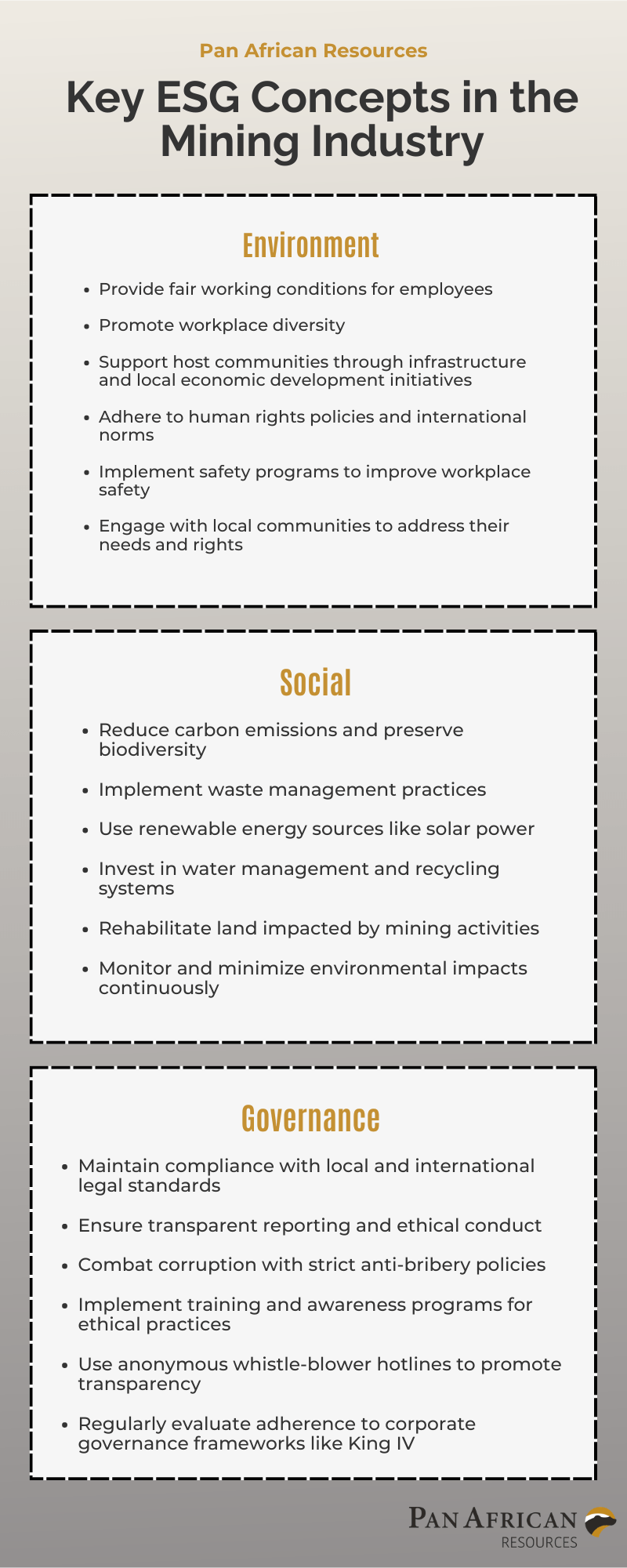
ESG in the Mining Industry Meeting Investor & Economic Demands

Environment

This aspect of sustainability focuses on the environmental impact, emphasizing efforts to lower carbon emissions and preserve biodiversity. It also includes waste management and the sustainable use of natural resources.

Investors are particularly interested in decarbonization initiatives, especially since South Africa imposes a carbon tax and is among the highest per capita polluters due to its reliance on coal-fired power plants for electricity. By adopting renewable energy sources, mining companies can reduce emissions, minimize or evade carbon tax liabilities, and enhance their investment appeal relative to competitors. Investors are also keen on how companies manage water and waste as part of their commitment to environmental protection and sustainability.

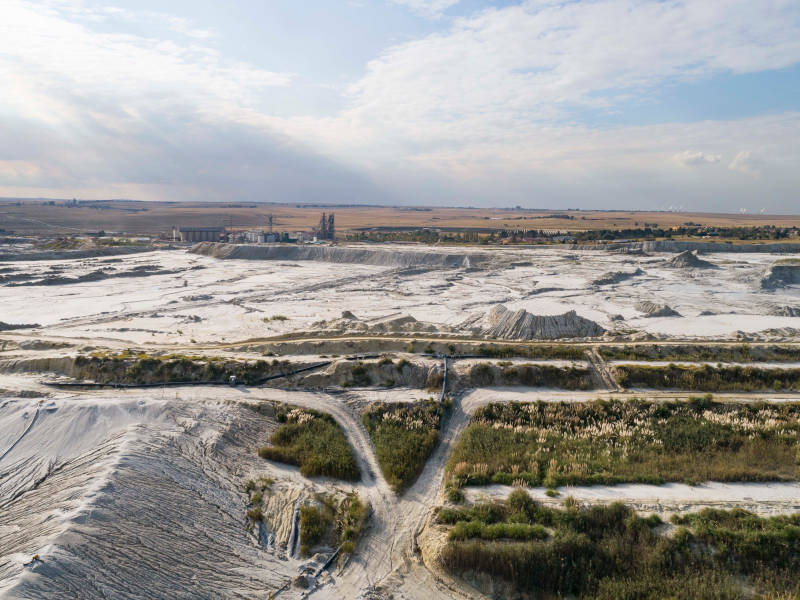
In its environmental conservation endeavors, Pan African Resources is increasingly powering its operations with solar energy to minimize its carbon footprint. The company has established a solar power facility that supplies 30% of the power needs for its Elikhulu surface retreatment operations at Evander and plans to construct an additional solar plant capable of producing 8.75MW to supply its Barberton Mines. There are also plans for a further 40MW through wheeling. The company has rehabilitated over 22 hectares of land in former mining areas. Moreover, Pan African Resources is investing in efficient water management and recycling, including a new recycling plant that processes 3 Megalitres per day of recycled underground water.

Decarbonization

Decarbonization is a critical focus within the mining sector’s environmental strategy, aimed at reducing carbon emissions and transitioning to cleaner energy sources. According to a study conducted by Accenture, when it comes to reducing emissions, investors believe mining companies should focus on Scope 3 emissions, with 59% of investors expecting mining companies to lead in their decarbonization efforts.

To combat this, mining companies are increasingly adopting renewable energy technologies with data analytics and AI to reduce their reliance on fossil fuels. Pan African Resources is leading this initiative by integrating solar power into its operations, significantly lowering its carbon footprint and demonstrating a commitment to sustainability. These efforts not only reduce operational costs but also enhance the company’s reputation among environmentally-conscious investors, positioning it favorably in a competitive market.

Social

The social element of ESG focuses on engaging stakeholders and recognizing the economic and social advantages a mining company brings to the regions it operates in. This encompasses providing fair working conditions for employees, promoting workplace diversity, and supporting host communities through infrastructure and local economic development initiatives.

Pan African Resources endeavors to adhere to South Africa’s human rights policies and international norms, such as the United Nations Guiding Principles on Business and Human Rights. The company enforces a strict policy against discrimination and harassment, ensuring an unbiased work environment.

The company has launched an extensive safe production intervention program to improve workplace safety, which includes enhancing incident reporting, enabling employees to stop unsafe practices, revitalizing task observations, and enforcing compliance through consequence management. Pan African Resources aims to better its safety performance by at least 3.86% yearly from 2023 to 2030, seeking a 24% total reduction compared to the past seven years, thus advancing its already commendable safety record in South Africa.

On the community support front, Pan African Resources contributes to the development of its host communities by investing in and upgrading educational and healthcare facilities. Recognizing that not everyone in the community can or wishes to work in mining, the company has initiated alternative employment projects, such as the large-scale Barberton Blueberry farm, which provides seasonal employment for up to 300 individuals, predominantly women. Besides offering competitive wages and safe working environments, the company also emphasizes employee well-being, providing fitness resources and promoting participation in sports activities to maintain a healthy, motivated workforce.

Governance

This ESG aspect pertains to the practices of management and oversight, encompassing resource management and compliance with current local and international legal and regulatory standards. Effective governance and transparent reporting are vital for the sustainable future of a business, as they can help lower operational costs and mitigate the risk of reputational harm.

Conversely, poor corporate governance can lead to fines and damage to reputation. Therefore, investors are eager to learn about a company’s efforts to combat corruption, adhere to regulatory requirements, and manage resources efficiently, ensuring the maintenance of its social license to operate.

Pan African Resources is dedicated to maintaining the highest standards of reporting and ethical conduct, adopting a zero-tolerance stance on bribery, corruption, and business misconduct. The Group’s ethical code, anti-bribery, and anti-corruption policies are reinforced through training, awareness initiatives, and disciplinary actions. An anonymous whistle-blower hotline promotes transparency, and the company’s adherence to the King IV™ corporate governance framework is periodically evaluated, underscoring its commitment to ethical leadership and corporate accountability.

Social

The social component of ESG concerns stakeholder engagement and awareness of the economic and social benefits that a mining company delivers to people in the areas where it operates. It covers everything from providing proper working conditions for employees to ensuring workplace diversity and supporting host communities through infrastructure and local economic development.

Pan African Resources uses its best endeavors to comply with South Africa’s human rights conventions and international standards, including the United Nations Guiding Principles on Business and Human Rights. The company also enforces a zero-tolerance policy on discrimination and harassment and upholds a work environment free from bias.

A comprehensive safe production intervention strategy has been implemented to enhance workplace safety, including revitalizing incident reporting, empowering employees to halt unsafe activities, re-energizing task observations, and enforcing compliance through consequence management. Additionally, the company has set medium-term targets to improve safety performance by at least 3.86% annually from 2023 to 2030, aiming for a 24% cumulative reduction compared to the previous seven years which will improve its already industry-leading safety statistics in South Africa.

On the social front, Pan African Resources actively supports development in its host communities, including funding and refurbishing schools like Sheba Primary and Ngwane Secondary School, and health clinics. The company also realizes that its mines cannot employ everyone in the community and not everyone wants to work on a mine and has commenced with alternate employment options, such as the large-scale agriculture projects (Barberton Blueberry farm) that employ up to 300 workers (mainly women) on a seasonal basis. In addition to paying competitive salaries and providing safe working conditions for its employees, the company also recognizes the importance of employee well-being, offering access to fitness coaches and encouraging participation in sporting events to foster a healthy and motivated workforce.

Governance

This part of the ESG deals with management and oversight practices. It covers the management of the company’s resources and compliance with up-to-date local and international legal and regulatory requirements. Strong governance and reporting transparency are important to the long-term sustainability of a business as they can help reduce operating costs and the risk of reputational damage to a company.

Weak corporate governance, on the other hand, can expose a company to fines and reputation damage. Consequently, investors want to hear what a company is doing to tackle corruption, and bribery and comply with regulatory obligations. They also want to know the measures the company is taking to ensure the efficient management of its resources and maintain the social license to operate.

As part of its sound governance policy, Pan African Resources is committed to the highest standards of reporting and ethical behavior, with a zero-tolerance approach to bribery, corruption, and commercial malpractice. The Group’s code of ethics, anti-bribery, and anti-corruption policies guide ethical conduct and are enforced through training, awareness campaigns, and disciplinary procedures. An anonymous whistle-blowing hotline supports transparency, and the Group’s compliance with the King IV™ corporate governance framework is regularly assessed, reflecting its dedication to ethical leadership and corporate responsibility.

Managing Investors ESG Expectations

Meeting mining ESG standards can influence a company’s capability to secure operating licenses, attract funding, recruit talent, and collaborate with local communities and regulatory bodies. Utilizing top ESG practices allows companies to broaden their opportunities, enhance their valuation, and establish themselves as responsible entities.

The spotlight on ESG within the mining sector is intensifying among stakeholders. For instance, investors are interested in understanding how a mining firm addresses ESG challenges and capitalizes on ESG-related opportunities, indicating that escalating ESG demands necessitate a balance between profitability and sustainable practices for mining entities.

Financial Implications of ESG

Given the significance of ESG in attracting investor trust and community endorsement, companies that excel in ESG can enjoy numerous advantages. Those with robust ESG profiles can obtain financing under more favorable conditions, assemble a competent workforce, and achieve operational consistency by minimizing disruptions through positive relationships with communities and regulatory agencies.

However, ESG accomplishments that remain unrecognized by stakeholders offer minimal benefit to a company. Therefore, effective ESG disclosure is crucial, starting with recognizing stakeholder expectations and distinguishing a company from its competitors lagging in ESG efforts and transparency.

Capital Risks and Opportunities

While ESG initiatives may increase expenses for a company, they also unveil numerous revenue-generating prospects. Investors are interested in a company’s strategies to seize economic opportunities emerging from the sustainability transition. Mining activities significantly impact local communities.

Thus, mining firms can demonstrate their respect for local cultures and their support for sustainable development in their host communities. Investing in education, healthcare, sports, and infrastructure can foster a mining company’s strong ties with its communities, endearing the company to investors.

Why Mining Companies Should Get Involved in ESG

With sustainability becoming a focal point, ESG mining companies have much to gain from integrating ESG into their operations. Here are some benefits the mining sector can unlock by embracing ESG:

Improved access to capital

Mining requires substantial capital. Companies with strong ESG credentials can secure funding more effortlessly or on more attractive terms. A growing number of investors are inclined towards sustainable ventures, allowing ESG-focused firms to tap into this pool for financing.

Additionally, lenders are increasingly offering sustainability-linked loans with preferential rates, enabling companies with strong ESG standings to obtain cost-effective financing, and providing them with a competitive edge.

Premium prices for products

There’s a rising consumer willingness to pay more for eco-friendly products. Consequently, mining outputs with a lower carbon footprint can command higher market prices, yielding significant profit margins. Therefore, rigorous ESG practices can cultivate a more devoted customer base, translating into enhanced financial performance.

Transitioning from fossil fuels to renewables not only bolsters a mining company’s energy efficiency but also reduces expenses. Enhanced energy efficiency leads to improved profit margins.

Increased shareholder value

Investors with a sustainability focus recognize the optimal returns for their investments. Firms with superior ESG ratings tend to outperform the broader market, potentially offering up to 10% additional value.

Improved relationship with the community

The social license to operate is crucial for mining firms. Those committed to sustainability can forge robust connections with employees, communities, and regulators. Moreover, strong ESG credentials can enhance a mining company’s relationships with customers and suppliers, giving it a competitive advantage in the market.

How Does ESG Work in An Economic Downturn

ESG considerations necessitate financial commitment and managerial attention. In times of economic recessions, companies face the dual challenge of balancing ESG obligations with financial constraints. Economic hardships may lead to budgetary reductions, yet there’s an escalating demand for the allocation of more resources toward ESG initiatives.

In South Africa, mining companies encounter two significant hurdles in their journey towards sustainability: disruptions in electricity supply and political turbulence.

Electricity load shedding

Frequent electricity “load shedding” in South Africa poses a substantial challenge. This practice involves the deliberate interruption of power supply by the utility company to prevent overloading the electrical grid during peak demand periods.

The disruptions of “load shedding” significantly affect mining operations, potentially halting certain production activities or necessitating the use of emergency power solutions. This can lead to decreased production, elevated operational costs, and diminished profit margins, with underground mining operations facing particularly severe impacts.

Beyond the immediate loss of production and revenue, load shedding compromises the safety of underground workers, as critical systems such as hoisting and ventilation may fail. To counteract these issues, mines have had to invest in backup systems and generators, further inflating operational costs and reducing the profitability of orebodies.

Political Instability

Recent years have seen considerable political instability in South Africa. Calls for governmental change, spurred by dissatisfaction with basic service provision, poor government performance, and internal divisions within the ANC party, have introduced significant uncertainty into the mining sector.

The push for the nationalization of key industries, including mining and land, by certain political factions, compounds these challenges. Additionally, actions by unions, such as the AMCU’s unlawful detainment of mine management and rival union members underground, exacerbate the instability, highlighting the importance of robust ESG practices in navigating these economic and political difficulties.

Is ESG Compulsory for Mining Companies?

Globally, mining companies are increasingly obligated to integrate sustainability into their operations. In South Africa, the mining sector is governed by various compliance and regulatory mandates to ensure sustainable mining practices.

Key ESG-related regulatory frameworks in South Africa include:

  • NEMA: The National Environmental Management Act stipulates the requirements for environmental management plans, impact assessments, and licensing.
  • MHSA: The Mine Health and Safety Act mandates measures to safeguard mine workers and surrounding communities.
  • MPRDA: The Mineral and Petroleum Resources Development Act imposes a series of obligations on mining firms, encompassing ESG responsibilities.

Furthermore, South African stock exchanges mandate ESG reporting for listed entities. For instance, the Johannesburg Stock Exchange (JSE) requires its listed companies to adhere to ESG reporting standards.

ESG as a long-term goal

Adopting robust ESG practices enables companies to generate long-term value for stakeholders and secure a social license to operate. Firms with strong ESG frameworks not only fare better financially but also command higher market valuations compared to those lacking in progressive ESG strategies.

January 12th, 2024ESG

About the Author: Neha Gupta

Neha Gupta has worked in the financial industry for over 17 years. Gupta earned her diploma in business administration degree from Symbiosis Centre of Distance Learning in 2009 and her passion for finance led her to pursue Chartered Financial Analyst (CFA) designation. She has successfully completed Level III of her CFA and now works as a full-time finance writer.

ESG in the Mining Industry: Meeting Investor & Economic Demands

The metals and mining sector is responsible for roughly 8% of worldwide carbon emissions. Therefore, Environmental, Social, and Governance (ESG) factors have become essential to the strategic planning of mining firms. Yet, the global move towards sustainability introduces both hurdles and prospects for the sector.

Pan African Resources (PAR) is a gold production company with an emphasis on the African continent. The organisation manages a collection of gold mining operations in South Africa, producing an annual output surpassing 200,000 ounces of gold. Pan African Resources is dedicated to establishing protected, profitable, lasting, and sustainable gold mining ventures.

TLDR

  • Mining enterprises must adhere to Environmental, Social, and Governance (ESG) standards set by a range of stakeholders, vital for enduring success and stability.
  • The environmental agenda focuses on reducing carbon footprints, conserving biodiversity, and managing resources efficiently, with a strong investor interest in carbon reduction and ecological preservation.
  • Social considerations involve engaging with stakeholders and contributing to the welfare of local communities, highlighting the importance of human rights and local engagements.
  • Governance relates to the sustainable management of resources, transparent disclosures, and legal compliance, where effective governance can reduce operational expenses and reputational risks.
  • Addressing ESG issues can widen business prospects, enhance shareholder value, and affirm a responsible reputation within the mining investment sector.
  • Benefits of ESG adherence include more straightforward access to capital, the ability to command premium prices for products, an increase in shareholder value, and enhanced community relations.
  • In economic downturns, the challenge lies in balancing ESG objectives with financial priorities, with investments in alternative energy and strong governance acting as safeguards against issues like power outages and political unrest.
  • In South Africa, mining firms are subject to mandatory ESG regulatory requirements, where compliance boosts long-term value for stakeholders and financial outcomes.

ESG in the Mining Industry

Mining firms report to a diverse group of stakeholders, each with distinct ESG expectations. These stakeholders range from investors and clients to suppliers, employees, government bodies, and local communities. Although short-term agreements may be needed, addressing ESG concerns is crucial for maintaining business resilience and achieving long-term prosperity.

We will now explore the ESG themes and Pan African Resources’ approach to addressing them:

Environment

This sustainability facet is concerned with minimising environmental impact, prioritising carbon emission reduction and biodiversity preservation. It also involves the efficient handling of waste and the prudent use of natural resources.

Decarbonisation efforts are of particular interest to investors, especially given South Africa’s carbon tax and its status as one of the top per capita polluters, largely due to its dependence on coal-powered electricity generation. Mining companies can lessen their carbon footprints and potentially bypass or lessen carbon tax impacts by integrating renewable energy sources, thereby boosting their attractiveness to investors. The management of water and waste is also critical to investors as part of the companies’ environmental stewardship and sustainability commitments.

Pan African Resources is progressively utilising solar energy to decrease its environmental footprint. The firm has developed a solar power station that caters to 30% of the energy requirements for its Elikhulu surface retreatment operations in Evander and is planning to establish another solar facility capable of generating 8.75MW for its Barberton Mines, alongside additional plans for 40MW through wheeling. Over 22 hectares of land have been rehabilitated in areas previously mined. Furthermore, Pan African Resources is dedicating efforts to effective water management and recycling, highlighted by the recent commissioning of a plant that recycles 3 Megalitres of underground water daily.

Social

The social dimension of ESG emphasises stakeholder engagement and the recognition of the socio-economic benefits that mining firms bring to their operational regions. This includes ensuring equitable working conditions for employees, fostering workplace diversity, and aiding host communities through infrastructure and local economic development projects.

Pan African Resources is committed to aligning with South Africa’s human rights frameworks and international standards, including the United Nations Guiding Principles on Business and Human Rights. The company maintains a firm stance against discrimination and harassment, promoting a workplace free from prejudice.

A comprehensive safety enhancement programme has been initiated to bolster workplace safety, featuring improved incident reporting, empowerment of employees to halt unsafe activities, revitalisation of task observations, and enforcement of compliance through disciplinary measures. Pan African Resources is striving to improve its safety record by at least 3.86% annually from 2023 to 2030, aiming for a 24% overall reduction compared to the previous seven years, thereby enhancing its already notable safety record within South Africa.

In terms of community engagement, Pan African Resources invests in the development of its host communities by refurbishing schools and healthcare facilities. Recognising that not all community members can or want to work in mining, the company has launched alternative employment initiatives, such as the substantial Barberton Blueberry farm project, which provides seasonal jobs to up to 300 people, mostly women. In addition to offering competitive pay and safe work environments, the firm also focuses on employee well-being, offering fitness programmes and encouraging participation in sports to foster a healthy, motivated team.

Governance

This area of ESG relates to management and oversight practices, covering the stewardship of company resources and adherence to prevailing local and international legal and regulatory frameworks. Strong governance and transparent reporting are essential for a business’s long-term viability, as they can reduce operating costs and mitigate reputational risks.

Conversely, weak corporate governance can expose a firm to penalties and reputational damage. Investors are thus keen to understand a company’s strategies to prevent corruption, comply with regulatory obligations, and manage resources effectively to maintain its social licence to operate.

Pan African Resources is dedicated to upholding the highest standards of reporting and ethical behaviour, with a zero-tolerance policy towards bribery, corruption, and misconduct. The Group’s code of ethics, anti-bribery, and anti-corruption policies underpin ethical conduct and are supported by training, awareness campaigns, and disciplinary procedures. An anonymous whistleblowing hotline enhances clarity, and the company’s compliance with the King IV™ corporate governance framework is routinely reviewed, highlighting its dedication to ethical leadership and corporate responsibility.

Social

The social component of ESG concerns stakeholder engagement and awareness of the economic and social benefits that a mining company delivers to people in the areas where it operates. It covers everything from providing proper working conditions for employees to ensuring workplace diversity and supporting host communities through infrastructure and local economic development.

Pan African Resources uses its best endeavors to comply with South Africa’s human rights conventions and international standards, including the United Nations Guiding Principles on Business and Human Rights. The company also enforces a zero-tolerance policy on discrimination and harassment and upholds a work environment free from bias.

A comprehensive safe production intervention strategy has been implemented to enhance workplace safety, including revitalizing incident reporting, empowering employees to halt unsafe activities, re-energizing task observations, and enforcing compliance through consequence management. Additionally, the company has set medium-term targets to improve safety performance by at least 3.86% annually from 2023 to 2030, aiming for a 24% cumulative reduction compared to the previous seven years which will improve its already industry-leading safety statistics in South Africa.

On the social front, Pan African Resources actively supports development in its host communities, including funding and refurbishing schools like Sheba Primary and Ngwane Secondary School, and health clinics. The company also realizes that its mines cannot employ everyone in the community and not everyone wants to work on a mine and has commenced with alternate employment options, such as the large-scale agriculture projects (Barberton Blueberry farm) that employ up to 300 workers (mainly women) on a seasonal basis. In addition to paying competitive salaries and providing safe working conditions for its employees, the company also recognizes the importance of employee well-being, offering access to fitness coaches and encouraging participation in sporting events to foster a healthy and motivated workforce.

Governance

This part of the ESG deals with management and oversight practices. It covers the management of the company’s resources and compliance with up-to-date local and international legal and regulatory requirements. Strong governance and reporting transparency are important to the long-term sustainability of a business as they can help reduce operating costs and the risk of reputational damage to a company.

Weak corporate governance, on the other hand, can expose a company to fines and reputation damage. Consequently, investors want to hear what a company is doing to tackle corruption, and bribery and comply with regulatory obligations. They also want to know the measures the company is taking to ensure the efficient management of its resources and maintain the social license to operate.

As part of its sound governance policy, Pan African Resources is committed to the highest standards of reporting and ethical behavior, with a zero-tolerance approach to bribery, corruption, and commercial malpractice. The Group’s code of ethics, anti-bribery, and anti-corruption policies guide ethical conduct and are enforced through training, awareness campaigns, and disciplinary procedures. An anonymous whistle-blowing hotline supports transparency, and the Group’s compliance with the King IV™ corporate governance framework is regularly assessed, reflecting its dedication to ethical leadership and corporate responsibility.

Managing Investors ESG Expectations

Meeting ESG standards can influence a company’s capability to secure operational licences, attract investment, recruit skilled personnel, and engage effectively with local communities and regulatory bodies. Employing exemplary ESG practices can broaden a company’s prospects, enhance its value, and affirm its status as a responsible entity.

The focus on ESG concerns within the mining sector is intensifying among stakeholders. For instance, investors are eager to understand how a mining firm is navigating ESG risks and seizing ESG-related opportunities, indicating that rising ESG demands necessitate a delicate balance between profitability and sustainable practices for mining organisations.

The significance of ESG in winning investor trust and community support means that companies excelling in ESG can enjoy extensive benefits. Hence, organisations with robust ESG profiles may find more favourable terms for capital access, cultivate a competent workforce, and achieve operational continuity by minimising disruptions thanks to positive relations with communities and regulatory authorities.

Yet, ESG accomplishments that remain uncommunicated to stakeholders provide minimal advantage to a company. Therefore, effective ESG disclosure is crucial, beginning with an understanding of stakeholder expectations and differentiating a company from its competitors who may be trailing in ESG efforts and transparency.

Although focusing on ESG considerations might increase a company’s operational expenses, it also unveils numerous avenues for profitability. Investors are keen to learn about the initiatives a company undertakes to harness the economic potentials unleashed by the sustainability transition.

The impact of mining activities on local communities can be significant. Therefore, mining firms have the opportunity to demonstrate their respect for local cultures and their commitment to fostering sustainable development within their host communities.

Investments in education, healthcare, sports, and infrastructure initiatives can enable a mining company to forge and sustain strong community bonds. Such community engagement programmes can endear a company to investors, reinforcing its favourable standing.

Why Mining Companies Should Get Involved in ESG

As sustainability garners more focus, the benefits for mining companies to integrate ESG into all aspects of their operations become increasingly apparent. Here are several advantages the mining sector can derive from embracing ESG principles:

Improved access to capital

Given the capital-intensive nature of mining, firms with notable ESG standings are better positioned to secure financing or negotiate more favourable terms. A burgeoning segment of the investor community wants to invest in sustainable enterprises, allowing ESG-oriented businesses to tap into this pool for financial resources.

Furthermore, some financial institutions offer loans linked to sustainability criteria at attractive interest rates, enabling companies with commendable ESG credentials to secure cost-effective financing, thus gaining a competitive edge in the market.

Premium prices for products

There is a growing consumer propensity to pay a premium for products deemed sustainable, enabling mining outputs with lower carbon footprints to command higher market prices and, consequently, yield better profit margins. Robust ESG practices can thus foster a more dedicated customer base, translating into superior financial performance.

Transitioning from conventional fossil fuels to renewable energy sources can further enhance mining companies’ energy efficiency and reduce overheads, leading to improved profit margins.

Increased shareholder value

Investors with a sustainability focus tend to identify and invest in companies that boast superior ESG ratings. They have been shown to outperform the broader market, potentially adding up to 10% more value.

Improved relationship with the community

The concept of a ‘social license to operate’ is critical for mining operations. Companies that prioritise sustainability can forge stronger bonds with employees, local communities, and regulatory bodies. Moreover, a solid ESG record can enhance a mining firm’s relationships with customers and suppliers, offering a competitive advantage.

How Does ESG Work in An Economic Downturn

The implementation of ESG initiatives requires both financial investment and managerial commitment. During economic recessions, companies face the challenge of balancing ESG responsibilities with financial imperatives. Economic contractions may necessitate budget cuts, yet there’s an increasing demand for enhanced investment in ESG initiatives.

In South Africa, the mining sector contends with two primary obstacles in their path to sustainability: disruptions in electricity supply and political volatility.

Electricity load shedding

Regular occurrences of electricity “load shedding” in South Africa pose significant operational challenges for mining companies. This practice involves the systematic interruption of power supply to prevent grid overload during peak demand periods.

Such disruptions can severely impact mining operations, potentially halting certain production activities or necessitating reliance on emergency power sources, leading to decreased productivity, heightened operational costs, and diminished profitability, especially for underground mining activities.

Beyond the immediate loss of production and revenue, load shedding compromises the safety of workers in underground mines, necessitating significant investment in backup systems and generators to mitigate these risks. This inflates operational costs and impacting the financial viability of mining projects.

Political Instability

Recent years have witnessed notable political instability in South Africa, with calls for governmental change driven by dissatisfaction with basic service provision, poor governance, and internal divisions within the ANC. The push for nationalisation of key sectors, including mining and land, by certain political factions, adds to the uncertainty.

Furthermore, increasing union activism, such as the AMCU’s unlawful actions in holding mine management and rival union members hostage underground, exacerbates the instability, underlining the critical role of robust ESG practices in navigating these economic and political challenges.

Is ESG Compulsory for Mining Companies?

Globally, mining companies are increasingly expected to integrate sustainability into their operations. In South Africa, the mining sector faces a variety of regulatory and compliance mandates designed to foster sustainable mining practices.

Key ESG-related legal and regulatory frameworks applicable to South African mining companies include:

  • NEMA: The National Environmental Management Act sets forth guidelines for environmental management plans, impact assessments, and the issuance of environmental licences.
  • MHSA: The Mine Health and Safety Act specifies measures to protect the health and safety of mine workers and surrounding communities.
  • MPRDA: The Mineral and Petroleum Resources Development Act imposes a series of requirements on mining operations, covering a broad spectrum of ESG responsibilities.

Furthermore, South African stock exchanges, such as the Johannesburg Stock Exchange (JSE), mandate ESG reporting for their listed entities, reinforcing the importance of sustainability in corporate governance.

ESG as a long-term goal

Adopting robust ESG frameworks allows companies to generate enduring value for their stakeholders and secure their operational legitimacy. Firms distinguished by their strong ESG practices not only achieve superior financial outcomes but also command a higher valuation in the marketplace compared to their counterparts lacking in forward-looking ESG strategies.

January 12th, 2024ESG

About the Author: Neha Gupta
Neha Gupta has worked in the financial industry for over 17 years. Gupta earned her diploma in business administration degree from Symbiosis Centre of Distance Learning in 2009 and her passion for finance led her to pursue Chartered Financial Analyst (CFA) designation. She has successfully completed Level III of her CFA and now works as a full-time finance writer.

ESG in the Mining Industry: Meeting Investor & Economic Demands

The metals and mining industry is responsible for about 8% of the global carbon emission. Consequently, Environmental, Social, and Governance (ESG) considerations have become a central part of business decisions for mining companies. However, the global pursuit of sustainability presents both challenges and opportunities for the mining industry.

Pan African Resources (PAR) is an African-focused gold producer. The company owns and operates a portfolio of gold mines in South Africa with a production capacity of over 200,000 ounces of gold per annum. Pan African Resources seeks to develop safe, high-margin, long-life, and sustainable gold mines.

TLDR

  • Mining companies must meet Environmental, Social, and Governance (ESG) expectations from various stakeholders, crucial for long-term success and resilience.
  • Environmental focus includes reducing carbon emissions, protecting biodiversity, and efficient resource management, with investors keen on decarbonization and environmental protection.
  • Social aspects cover stakeholder engagement and benefits to local communities, emphasizing human rights and relationships with local populations.
  • Governance involves managing resources sustainably, transparent reporting, and complying with legal standards, with strong governance reducing operational costs and reputational risks.
  • Addressing ESG concerns can expand business opportunities, increase shareholder value, and secure a responsible reputation in the mining investment industry.
  • ESG compliance benefits include easier capital access, premium product pricing, increased shareholder value, and stronger community relationships.
  • During economic downturns, balancing ESG and financial goals is challenging, with alternative energy investments and strong governance mitigating risks like electricity disruptions and political instability.
  • In South Africa, mining companies face compulsory regulatory ESG obligations, with compliance enhancing long-term stakeholder value and financial performance.

ESG in the Mining Industry

Mining companies answer to many stakeholders with specific ESG expectations. These include investors, customers, suppliers, employees, governments and communities. While there are tradeoffs to be made in the short term, addressing ESG concerns is important to business resilience and long-term success.

Let’s explore the ESG themes and what Pan African Resources is doing about them:

Environment

This part of sustainability addresses the impact on the natural environment as it concerns efforts to reduce carbon emissions and protect biodiversity. It also involves the management of waste and natural resources.

Regarding the environment, investors want the focus to be on decarbonization efforts as South Africa has a carbon tax and the country is one of the highest per capita polluters as most of its power supply is from coal-fired power stations. Mining companies can cut down emissions and reduce or avoid the carbon tax burden by increasing the use of renewable energy in their operations to reduce their carbon footprints. As a result, decarbonization efforts can save the company money and improve its investment case compared to its peers. Investors also want to hear how mining companies are managing water and waste as part of environmental protection and sustainability efforts.

As part of its environmental protection efforts, Pan African Resources uses solar energy to power an increasing number of its operations as it works to reduce its carbon footprint. They have built a solar power plant that provides 30% of its electricity demands at the Elikhulu surface retreatment operations at Evander, with further plans to build an additional solar plant that can generate 8.75MW to power its Barberton Mines and also have plans for a further 40MW through wheeling. The company has also rehabilitated more than 22 hectares of land from its depleted mining areas. Additionally, Pan African Resources continues to invest in efficient water management and water recycling, where a recycling plant producing 3 Megalitres per day of recycled underground water has recently been commissioned.

Social

The social component of ESG concerns stakeholder engagement and awareness of the economic and social benefits that a mining company delivers to people in the areas where it operates. It covers everything from providing proper working conditions for employees to ensuring workplace diversity and supporting host communities through infrastructure and local economic development.

Pan African Resources uses its best endeavors to comply with South Africa’s human rights conventions and international standards, including the United Nations Guiding Principles on Business and Human Rights. The company also enforces a zero-tolerance policy on discrimination and harassment and upholds a work environment free from bias.

A comprehensive safe production intervention strategy has been implemented to enhance workplace safety, including revitalizing incident reporting, empowering employees to halt unsafe activities, re-energizing task observations, and enforcing compliance through consequence management. Additionally, the company has set medium-term targets to improve safety performance by at least 3.86% annually from 2023 to 2030, aiming for a 24% cumulative reduction compared to the previous seven years which will improve its already industry-leading safety statistics in South Africa.

On the social front, Pan African Resources actively supports development in its host communities, including funding and refurbishing schools like Sheba Primary and Ngwane Secondary School, and health clinics. The company also realizes that its mines cannot employ everyone in the community and not everyone wants to work on a mine and has commenced with alternate employment options, such as the large-scale agriculture projects (Barberton Blueberry farm) that employ up to 300 workers (mainly women) on a seasonal basis. In addition to paying competitive salaries and providing safe working conditions for its employees, the company also recognizes the importance of employee well-being, offering access to fitness coaches and encouraging participation in sporting events to foster a healthy and motivated workforce.

Governance

This part of the ESG deals with management and oversight practices. It covers the management of the company’s resources and compliance with up-to-date local and international legal and regulatory requirements. Strong governance and reporting transparency are important to the long-term sustainability of a business as they can help reduce operating costs and the risk of reputational damage to a company.

Weak corporate governance, on the other hand, can expose a company to fines and reputation damage. Consequently, investors want to hear what a company is doing to tackle corruption, and bribery and comply with regulatory obligations. They also want to know the measures the company is taking to ensure the efficient management of its resources and maintain the social license to operate.

As part of its sound governance policy, Pan African Resources is committed to the highest standards of reporting and ethical behavior, with a zero-tolerance approach to bribery, corruption, and commercial malpractice. The Group’s code of ethics, anti-bribery, and anti-corruption policies guide ethical conduct and are enforced through training, awareness campaigns, and disciplinary procedures. An anonymous whistle-blowing hotline supports transparency, and the Group’s compliance with the King IV™ corporate governance framework is regularly assessed, reflecting its dedication to ethical leadership and corporate responsibility.

Managing Investors ESG Expectations

Compliance with ESG matters can affect a company’s ability to obtain operating permits, raise capital, attract talent, and work with host communities and regulators. Companies can leverage best ESG practices to expand their opportunities, increase the value of their businesses, and secure their reputation as responsible conglomerates.

ESG issues in mining are getting increasing attention from stakeholders. For example, investors want to know how a mining company is managing ESG risks and exploiting ESG opportunities, meaning growing ESG expectations require mining companies to balance profit goals and sustainability efforts.

As ESG has become important to gaining investor confidence and community acceptance, companies that get it right on ESG matters can reap many benefits. As such, companies with strong ESG credentials can access capital on more favourable terms, build a strong workforce and maintain operational stability through reduced disruptions because of their good terms with communities and regulators.

However, ESG achievements that are not known to stakeholders are of little help to a company. That is why proper ESG reporting is important and begins with understanding the expectations of the different stakeholders and also sets a company apart from its peers that are lagging in ESG compliance initiatives and reporting.

While addressing ESG matters can add to a company’s costs, it can also open up many profit opportunities. Investors want to hear the steps a company is taking to capture the economic opportunities brought about by the shift to sustainability.

Mining operations can have huge impacts on communities. As a result, mining companies can highlight how they are respecting the cultures of the local people and supporting sustainable development in their host communities.

Funding of education, healthcare, sports, and infrastructure programs can help a mining company build and maintain a strong relationship with its communities. Such community support programs can put a company in good favour with investors.

Why Mining Companies Should Get Involved in ESG

With the increasing attention focused on sustainability, there are many benefits for mining companies to get involved in ESG in everything they do. These are some of the benefits the mining industry can unlock from making ESG part of their business.

Improved access to capital

Mining is a capital-intensive operation. Companies with strong ESG credentials can access funding more easily or raise capital at generous terms. For example, a growing community of investors wants to invest in sustainable businesses. As a result, ESG-focused companies can tap into this investor pool and obtain funding.

Moreover, many lenders are providing sustainability-linked loans with favourable rates. Therefore, companies with strong ESG credentials can raise cheap capital and gain a financing advantage over the competitors.

Premium prices for products

An increasing number of consumers are willing to pay more for sustainable products. As a result, low-carbon mining products can fetch premium prices on the market, delivering strong margins for mining companies. Therefore, strong ESG practices can help a company build a more loyal customer base. As a result, strong ESG performance also produces higher financial returns.

Shifting from fossil fuels to renewable energy can additionally help mining companies improve their energy efficiency and cut costs. With improved energy efficiency, companies will see higher margins.

Increased shareholder value

Sustainability-minded investors know where to place their money for the best returns. Companies with higher ESG ratings have been found to deliver higher returns than the broader market, delivering up to 10% more value.

Improved relationship with the community

Social license to operate is important for mining companies. Sustainability-focused companies can build strong relationships with employees, communities, and regulators. Additionally, strong ESG credentials can help mining companies improve relationships with customers and suppliers, which can give them an edge in the competitive market.

How Does ESG Work in An Economic Downturn

ESG matters require financial investments and management time. In an economic recession, companies are under pressure to manage ESG factors and financial expectations. An economic slowdown may force budget cuts, yet companies face a growing demand to increase ESG funds allocation.

In South Africa, mining companies have two major challenges as they work toward sustainability: electricity supply disruption and political instability.

Electricity load shedding

In South Africa, electricity “load shedding” is a common occurrence. This is the practice of the power utility interrupting the electricity supply to avoid overwhelming the power system when demand is too high.

Load shedding has a big impact on the operations of mining companies. Mines may be forced to stop some production processes or resort to backup power. That can result in reduced output, increased production costs, and reduced profit margins. The impact of load shedding is particularly more serious on underground mine operations.

Apart from lost production and revenue, load shedding also affects the safety of underground mine workers, as the safety of workers operating underground is put at risk when the electricity that runs the hoisting or ventilation system they use goes out. Mines have had to install backup systems and generators at their own costs to mitigate these effects, further increasing production costs and reducing the economic life of the orebodies.

Political instability

The South African political scene has been fairly unstable in recent years. The clamor for regime change because of dissatisfaction with the delivery of basic services and poor government performance and divisions within the ruling party ANC poses serious political uncertainty risks to the mining industry in South Africa.

There is also a growing political push to nationalize certain industries. Particularly, some political actors have pushed for the nationalization of mines and land. Despite these challenges, mining companies in South Africa with strong ESG practices can weather the economic and political storms. Increasing power plays by unions add to instability, as seen recently when the AMCU union illegally held mine management and rival unions, hostage, underground in order to be recognized as the dominant union.

Is ESG Compulsory for Mining Companies?

Mining companies globally are increasingly required to address sustainability matters. In South Africa, the mining industry is subject to a range of compliance and regulatory requirements to ensure sustainable mining practices.

These are some of the ESG-related regulations and compliance requirements that mining companies in South Africa are subject to:

  • NEMA: The National Environmental Management Act (NEMA) details the requirements for environmental management plans, environmental impact assessments, and environmental licenses.
  • MHSA: The Mine Health and Safety Act (MHSA) outlines the requirements to ensure the health and safety of mine workers and communities.
  • MPRDA: The Mineral and Petroleum Resources Development Act (MPRDA) details a range of requirements for mining companies, including ESG obligations.

Additionally, stock exchanges in South Africa have ESG reporting requirements for the listed companies. For example, the JSE has an ESG compliance reporting mandate for the listed companies.

ESG as a long-term goal

Companies with strong ESG practices can create long-term value for their stakeholders and maintain a social license to operate. Moreover, companies with strong ESG credentials perform better financially and attract higher market valuation than companies that do not have progressive ESG strategies in place.

January 12th, 2024ESG, ICP Focused

About the Author: Neha Gupta

Neha Gupta has worked in the financial industry for over 17 years. Gupta earned her diploma in business administration degree from Symbiosis Centre of Distance Learning in 2009 and her passion for finance led her to pursue Chartered Financial Analyst (CFA) designation. She has successfully completed Level III of her CFA and now works as a full-time finance writer.
Go to Top