Pan African Mine Tailings – Sustainable Mine Management

It was a sad day when Johannesburg’s “Top Star Drive-in” closed in 2008. Top Star was a landmark, where many local citizens had enjoyed movies and fantastic views over the city. The reason for closure was more to do with competition from cable TV than the fact that Top Star was located on top of an old gold mine tailings facility, the Ferreira dump. Today, such a location would be inconceivable.

In the last decade, tailings dam collapses across the world have become more frequent and severe. This is mainly because tailings dams are getting larger as more low-grade deposits are being exploited, according to Earthworks.org.

For example, in 2015 the Samarco iron ore mine’s tailings dam in Brazil burst, killing 19 people. An even more serious incident occurred four years later, with the failure of the Brumadinho tailings dam at the Corrego do Feijao mine, also in Brazil, where almost 300 people died. In 2022, in South Africa, the Jagersfontein tailings dam on a diamond mine in the Free State collapsed, killing two people.

Apart from the loss of life and damage to property, these disasters released huge amounts of toxic sludge into the surrounding environment. In response, the UN Environment Programme, Principles for Responsible Investment and the International Council on Mining and Metals (ICMM, in 2020 launched the Global Industry Standard on Tailings Management.

According to Earthworks.org, globally mining companies discard an estimated 180 million tons of hazardous mine waste each year. There’s an estimated 18,000 tailings dams around the world, of which 3,500 are active.

What are tailings?

Tailings are mine waste, which can be stored underground or on surface. The integrity of storage facilities, and their potential for damage, depends on their design, where they were built, the occurrence of extreme weather events, and the nature of the material stored.

For example, the waste from underground gold mining that occurred in South Africa after 1890 includes silica sand, heavy metals, toxic chemicals and in some areas, uranium – as well as a small fraction of residual gold. Dust blowing off these sites as well as water run-off was damaging the air quality and the city’s water resources, and the health effects were intensified by the intrusion of people building houses or playing (even sand-surfing) on their perimeters.

The good news is that with modern processing techniques and bulk mining, the residual gold in tailings storage facilities (TSFs) can be extracted at low cost. Reclamation simultaneously makes a profit for the operators and cleans up the environment (although even when levelled, those sites will never be suitable for residential housing).

South Africa’s gold TSFs are being re-mined by several companies, both large and small. Some companies are simultaneously mining underground, and some are specialists in mine waste management.

The older gold TSFs can yield 0.1-2.5 grams/ton of gold. Grades like this could not support a deep-level mine, but they are viable for modern open-pit mines and tailings retreatment operations. For example, Pan African Resources, which owns the long-established Barberton Mines complex in Mpumalanga, moved into tailings treatment about six years ago, and it fits into the company’s commitment to sustainable mining. The Barberton Mines Tailings Retreatment Project (BTRP) has a head grade of 1.6-2.2 grams/ton, with recoveries at around 27-43%. For comparison, the three underground mines in the Barberton complex – Fairview, Consort and Sheba – have head grades of 5-14 g/t, and their processing recoveries are above 90%.

Pan African has another tailings retreatment operations, Elikhulu at the Evander Mine, and recently concluded an agreement to buy a number of TSFs from Mintails, which is in business rescue (a process similar to Chapter 11 reorganisation in the US).

The Mintails project

Today all of central Johannesburg’s old gold dumps have already been levelled, but there are still significant amounts of gold tailings on the western and eastern fringes. 

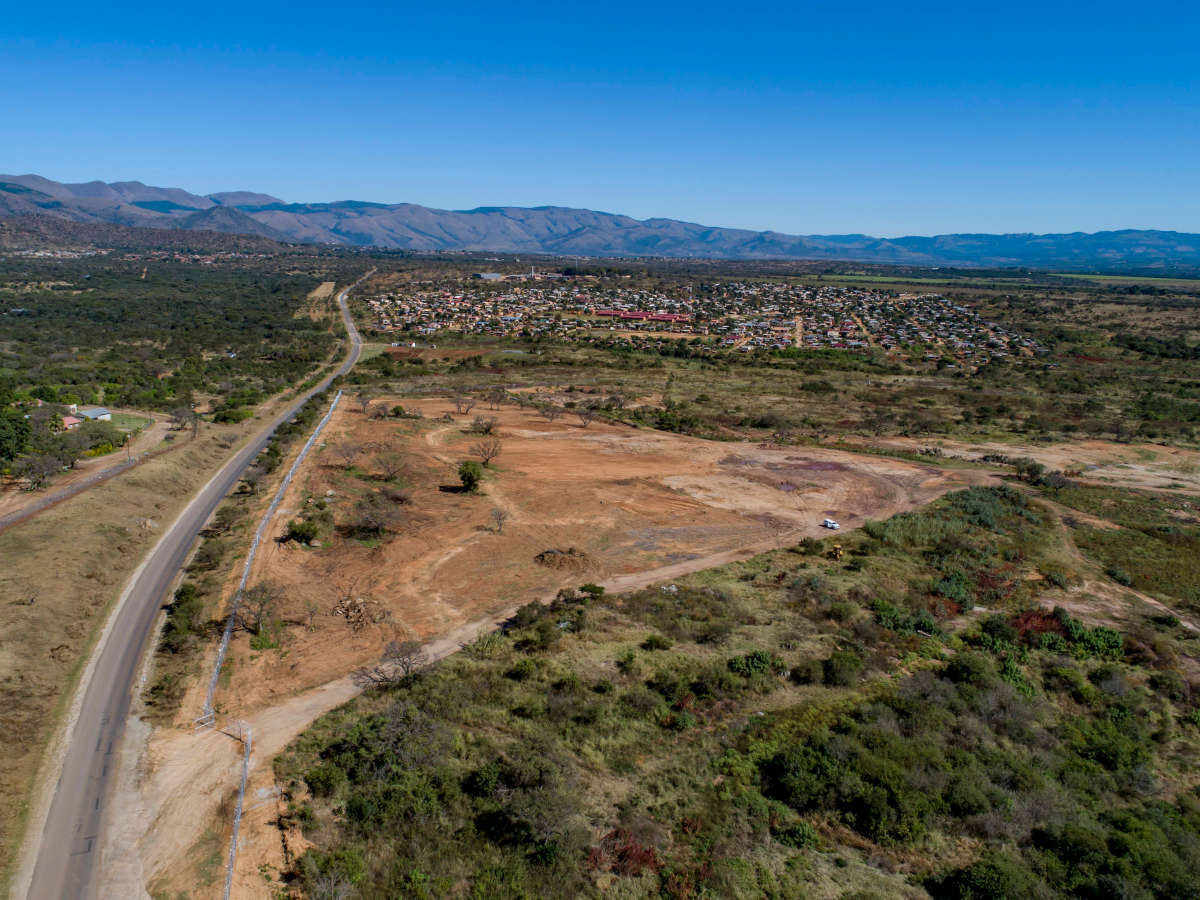
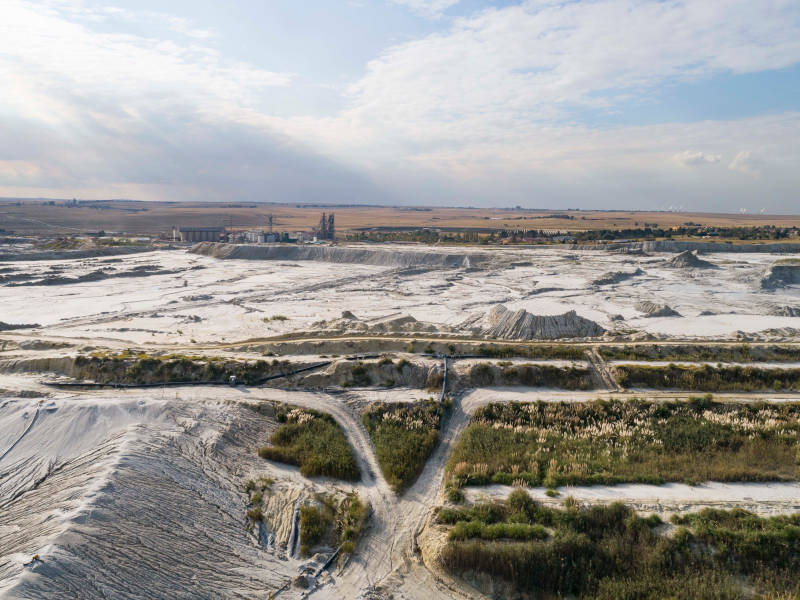
The Mintails dumps around Krugersdorp on the far western edge of Johannesburg have been a running sore for nearby residents for decades. The area is an environmental wasteland: a collection of rusting old buildings and stained puddles, overrun by illegal miners and a haven for criminals. Because of the financial troubles of the previous owners, no funding was set aside for environmental rehabilitation, which deterred many other potential buyers. 

Reprocessing the Mintails TSFs will enable Pan African to demonstrate its philosophy of “going beyond compliance”.

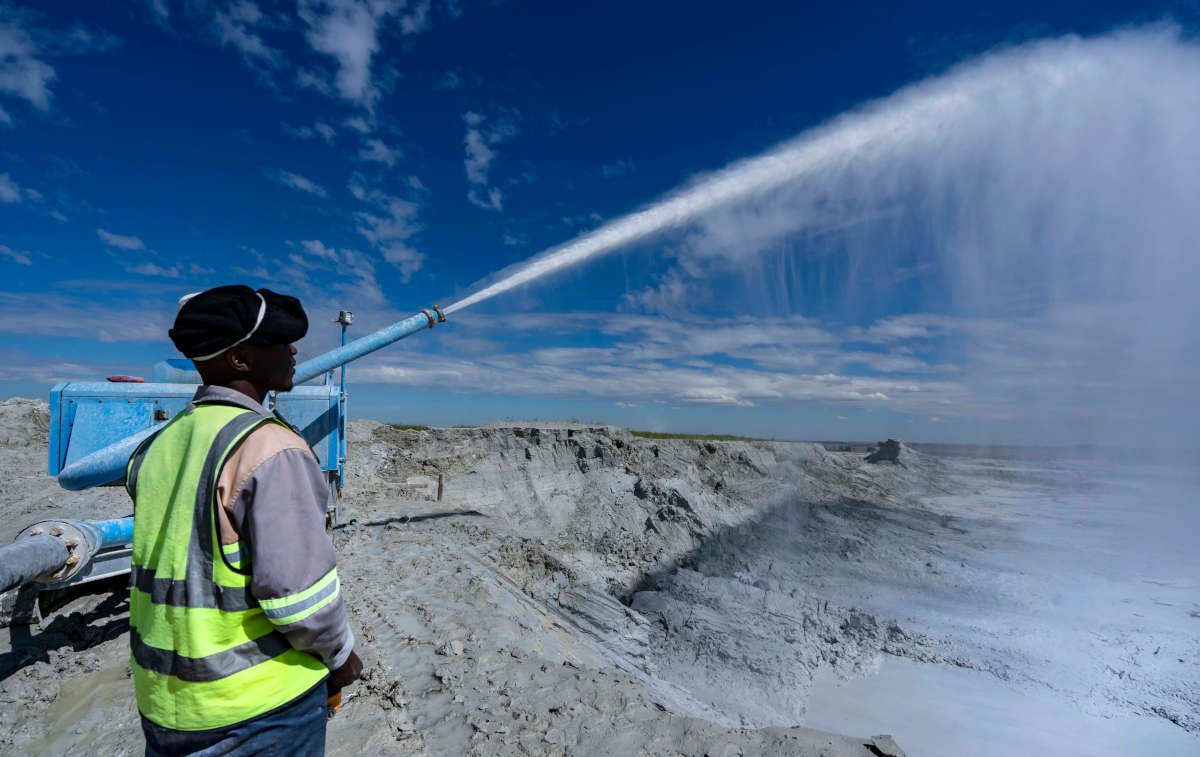
Pan African estimates there are about 120 million tons of re-mineable material in the TSFs it has bought from Mintails, with a head grade of about 0.3g/t, representing about 1.1 million ounces of gold. It will use hydro mining – blasting the material with high-pressure hoses and piping the slurry to a modern automated treatment plant – which is a proven low-cost, low-impact simple mining method.

“These tailings represent a massive unutilised asset for both Pan African and the local community,” CEO Cobus Loots says. “Re-mining them will add about 25%, or 50,000oz/year, to Pan African’s production over 13 years, while contributing to the environmental rehabilitation of the site. Our activities will also create socio-economic opportunities for local communities and suppliers, including job creation, skills and supplier development, to lift up the standard of living in Krugersdorp.”

Pan African has finalised the necessary R2.5 billion ($129 million) of funding to acquire and mine the tailings, at favourable rates. It intends to begin construction of the processing plant, subject to permitting, by June, with steady state production scheduled for December 2024. Post-commissioning, Mintails’ payback period will be about three and a half years, based on prevailing rand gold prices.

A solar PV plant could also be constructed on the site to provide steady power supply and to reduce the company’s carbon footprint. Pan African recently completed a 9.9MW solar plant at Evander, which will be expanded in the near future, and is planning to build a second solar PV plant at Barberton.

Conclusion

Mining doesn’t have to leave a bad legacy. Pan African’s substantial investment in the Mintails assets and renewable energy plants in South Africa will sustain its future in South Africa for many years, while bringing benefits such as job creation, skills and a cleaner environment to the people living around its operations.

September 6th, 2023ESG, ICP Focused

About the Author: Charlotte Mathews

Charlotte Mathews is a financial journalist with over 30 years of experience on daily, weekly and monthly publications. From 2001 to 2018 she worked for two of the Arena Holdings’ publications, Business Day and Financial Mail, writing about South Africa’s mining and energy sectors. She has also written on personal finance for Independent Newspapers and Moneyweb and worked for a news agency in London. She is now a freelance writer and editor working from home. She holds a BA from Wits University and a postgraduate diploma in Journalism from Rhodes University.

Pan African Mine Tailings – Sustainable Mine Management

The closure of the “Top Star Drive-in” in Johannesburg in 2008 was a significant event. More than just a spot for watching films against the city’s skyline, Top Star was a beloved institution. Its closure was largely blamed on the emergence of cable TV, rather than its unusual location atop the Ferreira dump, a site of old gold mine tailings. Nowadays, such a setting for a drive-in cinema would be unimaginable.

In recent years, there has been a noticeable rise in the frequency and severity of tailings dam failures worldwide. This increase is primarily due to the extraction of lower-grade ores, necessitating larger tailings dams, as Earthworks.org notes.

For example, in 2015, the tailings dam at the Samarco iron ore mine in Brazil burst, leading to 19 deaths. An even more devastating incident occurred in 2019 when the Brumadinho tailings dam at the Corrego do Feijao mine in Brazil failed, resulting in nearly 300 fatalities. More recently, in 2022, the collapse of the Jagersfontein tailings dam at a diamond mine in the Free State province of South Africa led to two deaths.

These disasters have not only resulted in loss of life and damage to properties but have also released large quantities of toxic sludge into the environment. In response, the UN Environment Programme, Principles for Responsible Investment, and the International Council on Mining and Metals (ICMM) launched the Global Industry Standard on Tailings Management in 2020.

It is estimated that mining operations worldwide dispose of around 180 million tons of toxic waste each year, with about 18,000 tailings dams globally, of which 3,500 are active, as per Earthworks.org.

What are tailings?

Tailings are essentially the waste material from mining processes, which can be stored either under the surface or over it. The risk and safety of these storage facilities depend on their construction, location, susceptibility to hazardous weather, and the nature of the waste stored.

In South Africa, mining waste from underground gold extraction post-1890 contains silica sand, heavy metals, toxic substances, and occasionally uranium, along with a minor amount of residual gold. The dust and runoff from these areas have affected air and water quality and public health, further aggravated by illegal housing developments and recreational activities around these sites.

Thankfully, modern processing methods and large-scale mining techniques now make it feasible to economically recover leftover gold from tailings storage facilities (TSFs), providing financial gains and addressing environmental issues. However, it’s worth noting that these reclaimed areas are still unsuitable for residential development.

Various firms in South Africa, both large and small, including those specialising in mine waste management, are now reprocessing gold TSFs. Some are also involved in concurrent underground mining.

The older gold TSFs offer yields of 0.1-2.5 grams of gold per ton, which, while not sufficient for deep-level mining, are economically viable for modern surface mining and tailings retreatment endeavours. For example, Pan African Resources, the operator of the renowned Barberton Mines in Mpumalanga, embarked on tailings treatment approximately six years ago, in line with its commitment to sustainable mining practices. The Barberton Mines Tailings Retreatment Project (BTRP) reports a head grade of 1.6-2.2 grams per ton, with recovery rates between 27-43%. For context, the head grades of the three underground mines at the Barberton site—Fairview, Consort, and Sheba—are between 5-14 g/t, with recovery rates above 90%.

Additionally, Pan African manages the Elikhulu tailings retreatment operation at the Evander Mine and has recently finalised an agreement to purchase several TSFs from Mintails, which is currently undergoing a business restructuring process similar to Chapter 11 reorganisation in the US.

The Mintails project

The once towering gold mine waste heaps that defined central Johannesburg’s skyline have now been levelled, yet significant amounts of gold tailings still skirt the city’s periphery.

The Mintails tailings, located near Krugersdorp on Johannesburg’s western fringe, have been a longstanding issue for the local populace. The site has deteriorated into an environmental eyesore, plagued by old, rusting structures and polluted water bodies, and has become notorious for illicit mining operations and criminal activities. The financial woes of its previous proprietors left the site without the necessary funds for environmental rehabilitation, deterring potential investors.

Pan African’s strategy to reprocess the Mintails Tailings Storage Facilities (TSFs) reflects its pledge to surpass standard regulatory requirements.

The company estimates that the Mintails TSFs contain about 120 million tons of reprocessable material, with an average gold content of 0.3g/t, translating to roughly 1.1 million ounces of gold. Pan African intends to utilize hydro mining techniques, which involve blasting the material with high-pressure water to create a slurry, then transporting this mixture to a modern processing facility. This approach is lauded for its efficiency and minimal ecological footprint.

CEO Cobus Loots commented, “These tailings represent a substantial untapped asset for both Pan African and the community at large. Reprocessing them could increase Pan African’s production by 25%, or an extra 50,000oz annually, over a span of 13 years, whilst contributing to the site’s environmental recovery. Our initiatives will also generate socio-economic benefits for the local populace and suppliers, such as employment opportunities, skill enhancement, and supplier development, thereby elevating the quality of life in Krugersdorp.”

Pan African Resources has arranged the required R2.5 billion ($129 million) funding to purchase and reprocess the tailings, on advantageous terms. The company plans to commence construction of the processing facility, contingent on obtaining the necessary permits, by June, aiming for operational readiness by December 2024. The return on this investment is anticipated within about three and a half years, based on the prevailing gold prices in South African rand.

Furthermore, there are proposals to establish a solar PV installation on the site to provide a consistent energy supply and reduce the company’s carbon emissions. Pan African recently unveiled a 9.9MW solar power station at Evander, with intentions to expand it soon, and is also planning a second solar facility at Barberton.

Conclusion

The aftermath of mining activities doesn’t necessarily have to be detrimental. Through its substantial investment in the Mintails venture and in sustainable energy solutions within South Africa, Pan African is poised to solidify its future operations in the country, whilst bringing benefits like job creation, skill advancement, and environmental improvements to the communities surrounding its operations.

September 6th, 2023ESG

About the Author: Pan African Resources

Pan African Mine Tailings – Sustainable Mine Management

The closure of Johannesburg’s “Top Star Drive-in” in 2008 marked a poignant moment. Top Star wasn’t just a venue for moviegoers to catch films with a panoramic view of the city; it was a cultural staple. Its shutdown was attributed more to the rise of cable television than its unique placement atop the Ferreira dump, an old gold mine tailings site. Such a location for a drive-in would be unthinkable today.

Over the past decade, the world has seen an increase in both the frequency and severity of tailings dam failures. This trend is largely due to the mining of lower-grade deposits, which results in larger tailings dams, as reported by Earthworks.org.

For instance, the Samarco iron ore mine’s tailings dam in Brazil ruptured in 2015, resulting in 19 fatalities. A more tragic event unfolded in 2019 with the collapse of the Brumadinho tailings dam at the Corrego do Feijao mine in Brazil, claiming nearly 300 lives. More recently, in 2022, the Jagersfontein tailings dam at a diamond mine in South Africa’s Free State province failed, resulting in two deaths.

These catastrophes have not only caused loss of life and property damage but also unleashed vast amounts of toxic waste into the environment. Responding to this, the UN Environment Programme, along with Principles for Responsible Investment and the International Council on Mining and Metals (ICMM), introduced the Global Industry Standard on Tailings Management in 2020.

Globally, mining companies are estimated to dispose of approximately 180 million tons of hazardous mine waste annually, with around 18,000 tailings dams worldwide, 3,500 of which are active, according to Earthworks.org.

What are tailings?

Tailings, the byproduct of mining operations, can be stored either underground or on the surface. The safety and potential risk of these storage sites depend on their design, location, exposure to extreme weather, and the type of waste stored.

For example, waste from South Africa’s underground gold mining, which began post-1890, contains not just silica sand and heavy metals but also toxic substances and, in certain areas, uranium, alongside a small amount of leftover gold. The dust and runoff from these sites have compromised air quality, water resources, and public health, exacerbated by unauthorized residential construction and recreational activities on these sites.

Fortunately, advancements in processing techniques and bulk mining now allow for the economical extraction of residual gold from tailings storage facilities (TSFs), turning a profit while simultaneously addressing environmental concerns. However, it’s important to note that even after reclamation, these areas are not suitable for housing development.

In South Africa, numerous companies, ranging from large to small and including those specializing in mine waste management, are re-mining gold TSFs. Some are engaged in underground mining concurrently.

Older gold TSFs can yield gold concentrations of 0.1-2.5 grams per ton. Although insufficient for deep-level mining, these grades are economically viable for contemporary surface mines and tailings retreatment projects. For instance, Pan African Resources, which operates the historic Barberton Mines in Mpumalanga, ventured into tailings treatment about six years ago, aligning with its dedication to responsible mining practices. The Barberton Mines Tailings Retreatment Project (BTRP) boasts a head grade of 1.6-2.2 grams per ton, achieving recovery rates of 27-43%. In comparison, the Barberton complex’s three underground mines—Fairview, Consort, and Sheba—feature head grades of 5-14 g/t with recovery rates exceeding 90%.

Pan African also operates the Elikhulu tailings retreatment facility at the Evander Mine and has recently agreed to acquire several TSFs from Mintails, currently undergoing a business rescue process akin to the US’s Chapter 11 reorganisation.

The Mintails project

All of central Johannesburg’s historic gold waste heaps have been flattened, yet substantial volumes of gold tailings remain on the city’s outskirts.

The Mintails tailings near Krugersdorp, on Johannesburg’s western boundary, have long been a concern for local residents. This area has turned into an environmental blight, characterized by decaying structures and contaminated pools, and has become a hotspot for illegal mining activities and criminal behavior. The financial difficulties faced by its former owners meant no funds were allocated for environmental clean-up, making the site less attractive to prospective investors.

By reprocessing the Mintails Tailings Storage Facilities (TSFs), Pan African aims to embody its commitment to exceeding regulatory standards.

Pan African has identified approximately 120 million tons of material in the Mintails TSFs suitable for re-mining, with an average grade of 0.3g/t, equating to around 1.1 million ounces of gold. The company plans to employ hydro mining techniques, which involve using high-pressure water jets to mobilize the material, then transporting the slurry to a state-of-the-art processing facility. This method is recognized for its cost efficiency and minimal environmental impact.

Cobus Loots, the CEO, stated, “These tailings are a significant untapped resource for both Pan African and the surrounding community. Processing them could boost Pan African’s output by 25%, or an additional 50,000oz per year, over 13 years, while also aiding in the environmental restoration of the area. Our operations will foster socio-economic benefits for local communities and suppliers, including job opportunities, skill development, and supplier enhancement, improving living standards in Krugersdorp.”

Pan African has secured the necessary funding of R2.5 billion ($129 million) to acquire and process the tailings, under favorable terms. The company aims to start constructing the processing plant, pending regulatory approvals, by June, with the goal of reaching full production by December 2024. Following the project’s completion, the investment is expected to be recouped within approximately three and a half years, based on current gold prices in South African rand.

Additionally, there are plans to build a solar PV facility on the premises to ensure a reliable power source and diminish the company’s carbon footprint. Pan African recently inaugurated a 9.9MW solar farm at Evander, with plans for expansion, and intends to construct another solar plant at Barberton.

Conclusion

Mining operations don’t have to result in negative legacies. Pan African’s significant investments in the Mintails project and renewable energy infrastructure in South Africa are set to secure its long-term presence in the country, while delivering advantages such as employment, skill development, and environmental enhancement for the communities near its sites.

September 6th, 2023ESG

About the Author: Pan African Resources

Go to Top